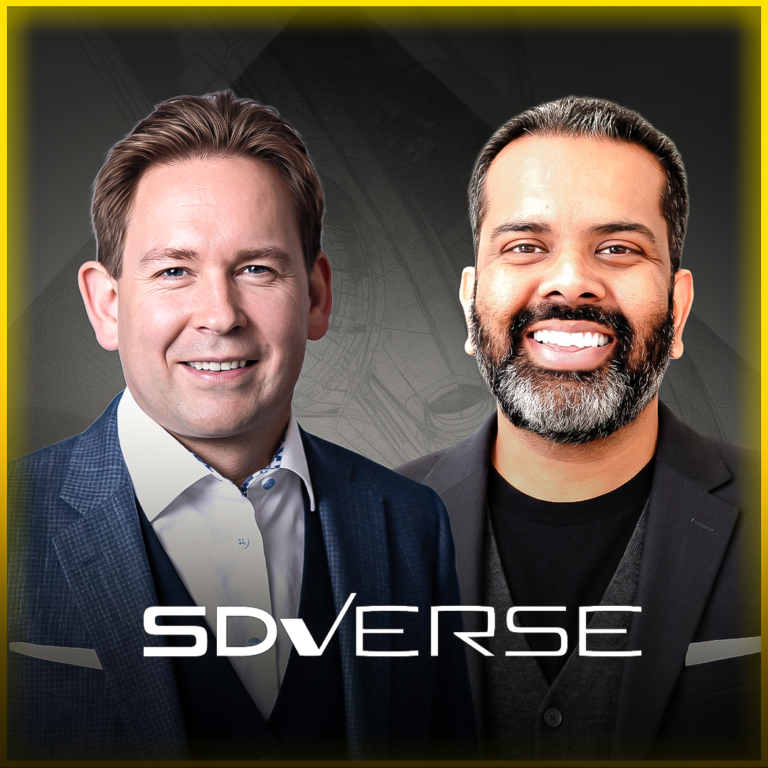

Prashant Gulati (SDVerse) and Konstantin Shirokinskiy (Roland Berger) discussing the automotive software supply chain
about podcast icon
Under The Hood: Automotive Storytelling
September 14, 2026

Why the SDV Revenue Promise Never Arrived

- The Automotive Software Supply Chain Nobody Built - S2E18

Behind every automotive innovation lies a human story. Hosted by Stéphane Lagresle, founder of The Storytelling Tribe, this podcast reveals how industry leaders translate complex technologies into compelling narratives. Through conversations with automotive executives, discover practical frameworks for making automotive innovations relatable and meaningful. For executives, product leaders, and marketers transforming mobility through better communication.


Follow
us on

Share
Episode

The Automotive Software Supply Chain Nobody Built

The software-defined vehicle was sold on a revenue story. The revenue didn’t meet expectations - by far. In this episode of Automotive Storytelling, Stéphane Lagresle sits down with two people who watched that gap open from opposite sides. Konstantin Shirokinskiy is a Partner at Roland Berger in Detroit and Global Co-Head of the firm's Software Technology Cluster, with earlier stops at DaimlerChrysler and Rivian. Prashant Gulati is CEO of SDVerse, the B2B automotive software marketplace founded by General Motors, Magna and Wipro, and previously VP of Strategy at Faraday Future. Together they take apart the story the industry told itself about the software-defined vehicle, and describe what is being built in its place.

Key
Insights

  • The SDV Business Case Was Underwritten by Revenue That Never Arrived

    New architectures and new software stacks are expensive, so the industry needed a business case to carry the investment. It chose recurring subscription revenue. Konstantin Shirokinskiy’s point is that revenue on one side of a transaction is cost on the other, and the consumer had already decided. They wanted the features. They did not want another subscription. When the top line did not appear, frustration moved quickly into cancelled platforms, cancelled architectures and significant write-downs. His verdict is that the framing was wrong from the beginning.

  • The Bottleneck Is Organizational, Not Technical

    Building a modern house from a clean site is straightforward. Remodelling a castle while living in it is a different problem, and that is the one large OEMs are solving. Konstantin lists what actually has to break: reporting structures, established processes, supplier relationships built over decades. Prashant Gulati adds the general case, that technology moves faster than an organization’s ability to adapt. Neither of them locates the failure in the technology. One engineer is launching the new architecture. Another is firefighting a program in a remote geography, and that program wins.

  • Consolidating the Hardware Left the Software Layer With No Supplier

    Collapsing the cluster ECU and the infotainment ECU into one high-performance computer was the part of the SDV story the industry grasped easily. The consequence was not. The tire pressure monitoring algorithm still has to come from somewhere, and the supply base was built to sell the ECU, not the algorithm inside it. Konstantin describes OEMs being forced to insource software that does not differentiate them, with no visibility into who would even be willing to sell it. Hardware could be costed to the cent. Software had no supply chain at all. SDVerse was built into that gap.

  • The Western Cost Gap Is a Standardization Gap

    On a comparable mid-size SUV, Konstantin puts the Chinese cost advantage at roughly 30 percent. Account for subsidies, labor and material costs and a large unexplained bucket is still left over. His reading is that it comes from scale, and that the scale comes from a discipline Western OEMs have not adopted: customize only where it earns something, standardize everywhere else, and accept off-the-shelf components and software. Not-invented-here is the habit, and with software costs rising it is becoming the expensive one.

Key Learning Icon

Key
Takeaways

  • Underwrite software investment on cost and time, not on new consumer revenue The subscription forecasts were a projection. Compressed sourcing cycles, faster program timelines and engineering hours not spent rebuilding commodity software are measurable this quarter. Finance leadership can sign off on the second category. It has already stopped signing off on the first.

  • Decide what actually differentiates, then buy everything else Insourcing a tire pressure monitoring algorithm wins no customer and consumes capacity you need for the features that do. The centralized architecture only pays off if the non-differentiating layer is sourced rather than rebuilt, which requires knowing who sells it.

  • Take first principles from Tesla, not the playbook Several companies started at the same time with the same clean-sheet architecture and the same vertical integration, and did not survive. Prashant attributes a great deal of destroyed value to copying the model rather than the reasoning behind it. Ask what makes your business work, not what made theirs work.

  • Change the story for each audience, never the substance An engineer, an investor, a board member and a sourcing lead need different levels of detail on the same solution. Prashant draws the line at governance: tailoring the message is legitimate, selling something you will have in two years as something you have today is not. Trust is the long game.

Practical Takeaways Icon
Podcast CTA Left Image
pci right

Where Technology Meets Narrative

Under the Hood: Automotive Storytelling uncovers the human narratives driving innovation in an industry that impacts lives worldwide. Hosted by Stéphane Lagresle, this podcast explores how the power of storytelling ultimately connects technology to humans.