
Behind every automotive innovation lies a human story. Hosted by Stéphane Lagresle, founder of The Storytelling Tribe, this podcast reveals how industry leaders translate complex technologies into compelling narratives. Through conversations with automotive executives, discover practical frameworks for making automotive innovations relatable and meaningful. For executives, product leaders, and marketers transforming mobility through better communication.

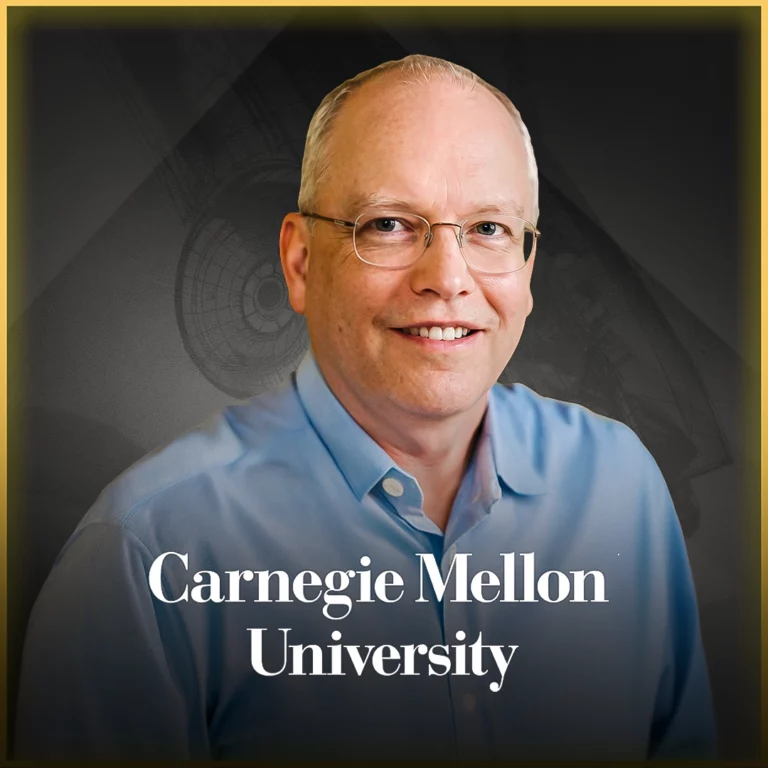
In this episode of Automotive Storytelling, the only podcast examining mobility through storytelling, Stéphane Lagresle sits down with Philip Koopman, Carnegie Mellon Faculty Emeritus and originator of the UL 4600 autonomous safety standard, to unpack why the industry's robotaxi safety narrative keeps breaking and what it would take to rebuild public confidence.
Autonomous driving did not begin as a safety project. The early programmes of the late 1990s, including the federally funded work Koopman started on, were about increasing highway capacity. Safety arrived later, as a promise that computers do not drive drunk or distracted and would therefore save lives. That version held until robotaxis reached public roads and started making mistakes no human would make, hitting a bus because it misjudged the length, hitting a utility pole because it lacked a curb. So the story was rewritten again, this time as a statistical argument about fewer crashes per mile. Koopman traces each rewrite back to the moment the previous one collided with something visible.
The US baseline is roughly one fatality per hundred million miles. Ten million clean miles therefore proves almost nothing, and hundreds of millions of miles are needed before the statistics say anything at all about fatality risk. Koopman’s point is that this cuts both ways. The industry cannot yet prove it is saving lives, and the public has no mechanism for weighing a confidence interval against a video of a robotaxi driving into floodwater or over lit fireworks. Both sides of the argument are being fought on terrain where one side has footage and the other has a null hypothesis.
Robotaxi companies sell on being safer than human drivers, and Koopman argues they never needed to. Aviation grew while it was still dangerous because it offered utility people wanted. What the public will not forgive is a vehicle that behaves badly, running red lights, driving the wrong way, passing a stopped school bus, and then defends itself by pointing at aggregate statistics. He borrows the UK’s “careful and competent driver” standard as the bar that actually matters. Meet it, and the numbers can settle over the following decade. Miss it, and no amount of data will close the confidence gap.
Edge cases turned out to be uncountable, so the industry stopped trying to train for all of them and brought humans back in through remote assistance. Koopman calls this a genuine engineering success, because it is what makes robotaxis viable at all. The problem is that companies frame remote operators as having no safety role, in order to keep them outside regulatory and liability scope, while those same operators are clearing vehicles through red lights and past stopped school buses. The mirror image appears in supervised L2, where imperfect automation is deployed alongside a human who is expected to be superhuman and gets blamed when they are not. Researchers call that arrangement the moral crumple zone.
Philip Koopman is Faculty Emeritus at Carnegie Mellon University, where he spent nearly thirty years as tenured faculty researching embedded systems, software safety and autonomous vehicle safety. He is the originator of UL 4600, the safety standard for autonomous products, and the author of "How Safe Is Safe Enough? Measuring and Predicting Autonomous Vehicle Safety" and "The UL 4600 Guidebook". Before academia he served as a US Navy submarine officer during the Cold War, designed embedded CPUs at Harris Semiconductor, and has since conducted more than 200 industry design reviews of embedded software projects. He writes on AV safety on Substack and LinkedIn.
Under the Hood: Automotive Storytelling uncovers the human narratives driving innovation in an industry that impacts lives worldwide. Hosted by Stéphane Lagresle, this podcast explores how the power of storytelling ultimately connects technology to humans.