
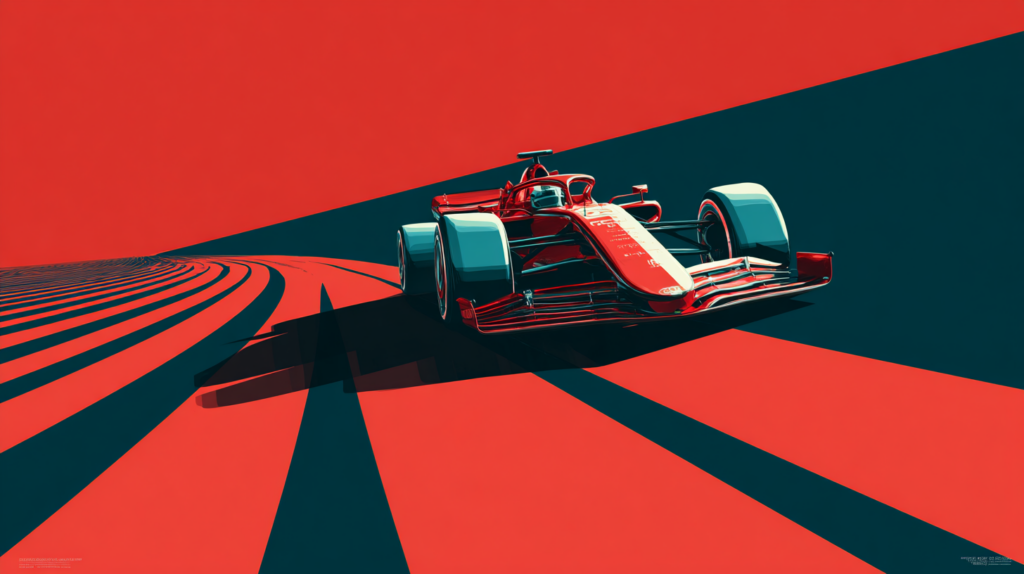
In an era where automotive brand storytelling has become as crucial as engineering excellence, few organizations exemplify this transformation better than Scuderia Ferrari. In an episode of “Under the Hood: Automotive Storytelling,” Nerea Palacios, former Head of Creative Services for Ferrari Racing, reveals the human stories behind one of motorsport’s most iconic brands and how the Netflix revolution reshaped Formula 1 marketing forever.
From navigating the delicate balance between Italian heritage and global expansion to understanding how Drive to Survive catalyzed a seismic shift in fan engagement, Nerea offers a rare behind-the-curtain perspective on Ferrari brand strategy. Her insights illuminate not just the world of Formula 1, but provide essential lessons for any organization grappling with how to tell compelling stories about complex technology while preserving authentic brand identity.
The Netflix Effect: How Drive to Survive Revolutionized Formula 1 Marketing
When Netflix launched Drive to Survive in 2019, Formula 1 underwent a transformation that marketing textbooks will study for decades. Nerea witnessed this evolution firsthand at Ferrari, joining just as the series began to air.
“If you think about it, Formula One was a primarily European sport,” Nerea explains. “The majority of the fan base was European based. And suddenly you have this humongous reach in the North American market, particularly in the US, where they were okay, but not really very interested. And suddenly, massive boom.”
The challenge wasn’t just about reaching new audiences—it was about welcoming them authentically. Ferrari faced a unique dilemma: how to maintain the team’s deeply Italian soul while making newcomers feel they belonged to the Scuderia family.
Three Key Shifts in Ferrari’s Storytelling Approach:
- Personalization at Scale: The team dramatically increased content production, creating segmented narratives for diverse audience profiles—from lifelong tifosi to Drive to Survive converts
- Cultural Adaptation: Balancing Italian heritage with global accessibility, ensuring both long-time Italian colleagues and international newcomers felt represented
- Multi-Platform Storytelling: Expanding beyond traditional motorsport media to feed the “very hungry” social media ecosystem with fresh, authentic content
As Nerea notes, “Most teams produce an unbelievable amount of content at unbelievable speeds and always genuinely new. The social game is very hungry all the time and you need to make sure you feed it.”
Behind the Prancing Horse: What It’s Really Like to Work at Ferrari
Signing a contract with Ferrari during COVID-19 without setting foot in Italy created a surreal experience for Nerea. But the reality hit when she first saw the massive yellow shield at the Maranello facility.
“You just look at that and there is this massive yellow shield,” she recalls. “It’s a strange feeling. It’s real, but it’s a little bit like, am I dreaming? It’s a nice feeling. It’s a very nice feeling.”
The romance quickly meets reality at Ferrari. Every creative decision—from paint choices to brand activations—faces strict technical constraints. Weight limits, performance requirements, and regulatory compliance create a complex equation that few outsiders appreciate.
This tension between creative vision and engineering limitations defines automotive storytelling at the highest level. It’s not just about crafting beautiful narratives; it’s about building brand systems that work within incredibly demanding constraints.
The Ferrari Brand Evolution Under New Audiences
Ferrari’s brand strategy evolved significantly to accommodate the Drive to Survive generation. The team recognized that new fans discovered Formula 1 through a different lens—one focused on human drama, behind-the-scenes access, and character-driven narratives rather than pure technical performance.
“You’re also welcoming people that didn’t have this Formula One culture necessarily and that just discovered Formula One through the Netflix lens,” Nerea observes. “Suddenly they come to your world and maybe this is where you need to adapt the storytelling on your side so that you make sure that everybody’s welcome.”
This required Ferrari to maintain authenticity while expanding accessibility—a balancing act that defines modern automotive brand storytelling.
The Future of Automotive Storytelling: Immersive Reality and Beyond
Looking ahead, Nerea sees immersive reality technologies reshaping how we experience motorsport and automotive innovation. Formula 1 collects massive amounts of data and operates in dynamic 3D environments—perfect conditions for next-generation storytelling.
Emerging Trends in Sports and Automotive Storytelling:
- Immersive Viewing Experiences: Apple’s Monaco track activation demonstrates how AR/VR can transform spectator experiences
- Driver Perspective Technologies: From driver eye cameras to heartbeat monitors, bringing fans closer to the actual experience
- Gaming-Reality Convergence: Blurring the lines between simulation and live sport consumption
- Data Visualization: Transforming complex telemetry into accessible, engaging narratives
“We’re trying to get as close as possible to being that driver or to have this feeling of what the driver has,” Nerea explains. “The challenge for Formula One is when you know that you have a system that is very stable and that is repetitive, you’re going to have to find new ways of telling the same story.”
This challenge resonates beyond motorsport. Every automotive company faces the same fundamental question: how do you make technical innovation feel fresh, accessible, and emotionally resonant?
The Critical Distance Between You and Your Brand
Perhaps Nerea’s most powerful insight addresses a trap that ensnares many brand professionals: confusing yourself with the brand you serve.
“How thin is the line between the individuals and the brand?” Nerea reflects. “Some people get so connected to the brand they’re working for that they believe they are the brand. Therefore, they become like this doctrine that you have to follow, to be or not to be.”
Her advice cuts to the heart of effective brand storytelling:
“It’s important to remember that brands are almost like a persona. The brand should be bigger than all of us, and none of us should be them. We should always try to understand them, trying to see what story do they feel like telling, what is the way they want to communicate and don’t cross the line.”
This wisdom applies universally—whether you’re crafting narratives for Ferrari, an automotive technology supplier, or an emerging mobility startup. The most effective brand storytellers maintain professional distance, serving as custodians and translators rather than becoming the brand itself.
The danger of brand-individual conflation includes:
- Creating content that reflects your preferences rather than audience needs
- Developing biased perspectives that blind you to performance issues
- Building systems around personalities rather than sustainable brand architecture
- Losing the objectivity needed to evolve brand strategy effectively
Lessons for Automotive Brand Strategy
Nerea’s journey from Under Armour to Ferrari to founding her own brand consultancy offers valuable frameworks for automotive organizations navigating storytelling challenges:
- Build Brand Systems, Not Just Campaigns: Consistent ingredients across all touchpoints create cohesive brand experiences
- Listen to Your Stakeholders: Effective cultural integration requires understanding both heritage team members and newcomers
- Balance Constraints with Creativity: Technical limitations shouldn’t kill innovation—they should inform it
- Personalize at Scale: Modern audiences expect content that speaks to their specific interests and entry points
- Protect Brand Independence: Serve the brand’s authentic voice rather than imposing your own
As automotive technology grows increasingly complex—from ADAS systems to software-defined vehicles to autonomous mobility—the ability to translate engineering excellence into compelling human narratives becomes ever more critical.
Conclusion: The Human Stories That Drive Innovation
Nerea Palacios’s experience at the intersection of Ferrari’s Italian heritage and global Formula 1 transformation illustrates a fundamental truth: behind every technical achievement lies a human story worth telling. Whether you’re launching an EV platform, explaining ADAS features, or building brand systems for a mobility startup, the principles remain constant.
The most effective automotive storytelling maintains authenticity while embracing accessibility, honors constraints while pursuing innovation, and serves the brand while remembering the audience.
Ready to dive deeper into this conversation? Listen to the full episode of “Under the Hood: Automotive Storytelling” with Nerea Palacios to hear more about her insights on Ferrari brand strategy, Formula 1 marketing evolution, and the future of immersive sports experiences.
Connect with Nerea on LinkedIn to discuss brand storytelling strategies, and subscribe to “Under the Hood” to never miss conversations with the visionaries shaping how we communicate automotive innovation.
Behind every dashboard and every feature lies a human story—and those are the stories we’re committed to uncovering here on Under the Hood.
Keywords: Ferrari brand storytelling, Formula 1 marketing, Drive to Survive impact, automotive brand strategy, sports brand storytelling, Formula 1 brand evolution, immersive reality sports, automotive storytelling, Scuderia Ferrari, brand strategy consulting, motorsport marketing, Netflix Drive to Survive, brand identity preservation, cultural brand adaptation, automotive content marketing